Logo
Search
Home
Archive
Login
Sign Up
Logo
  • Home
  • Posts
  • This week: new possibilities for longer, healthier lives
Steve Weber
Steve Weber

Sep 21, 2026

•

3 min read

Your guide to what’s nextSeptember 21, 2026
The Next Patient — AI-driven healthcare intel

Good morning, the future of health has a few surprises up its sleeve—and this week gives us plenty of reasons to be curious about what’s next.

In this issue

 
01Personalized cancer vaccines and new medicines get a boost from OpenAI and Claude
02A new lung-cancer treatment could give some patients more time
03A brain implant turns attempted speech into a talking, expressive avatar
04A newly discovered CRISPR ancestor could inspire new gene-editing methods
05A lung-disease treatment shows early promise for longevity research
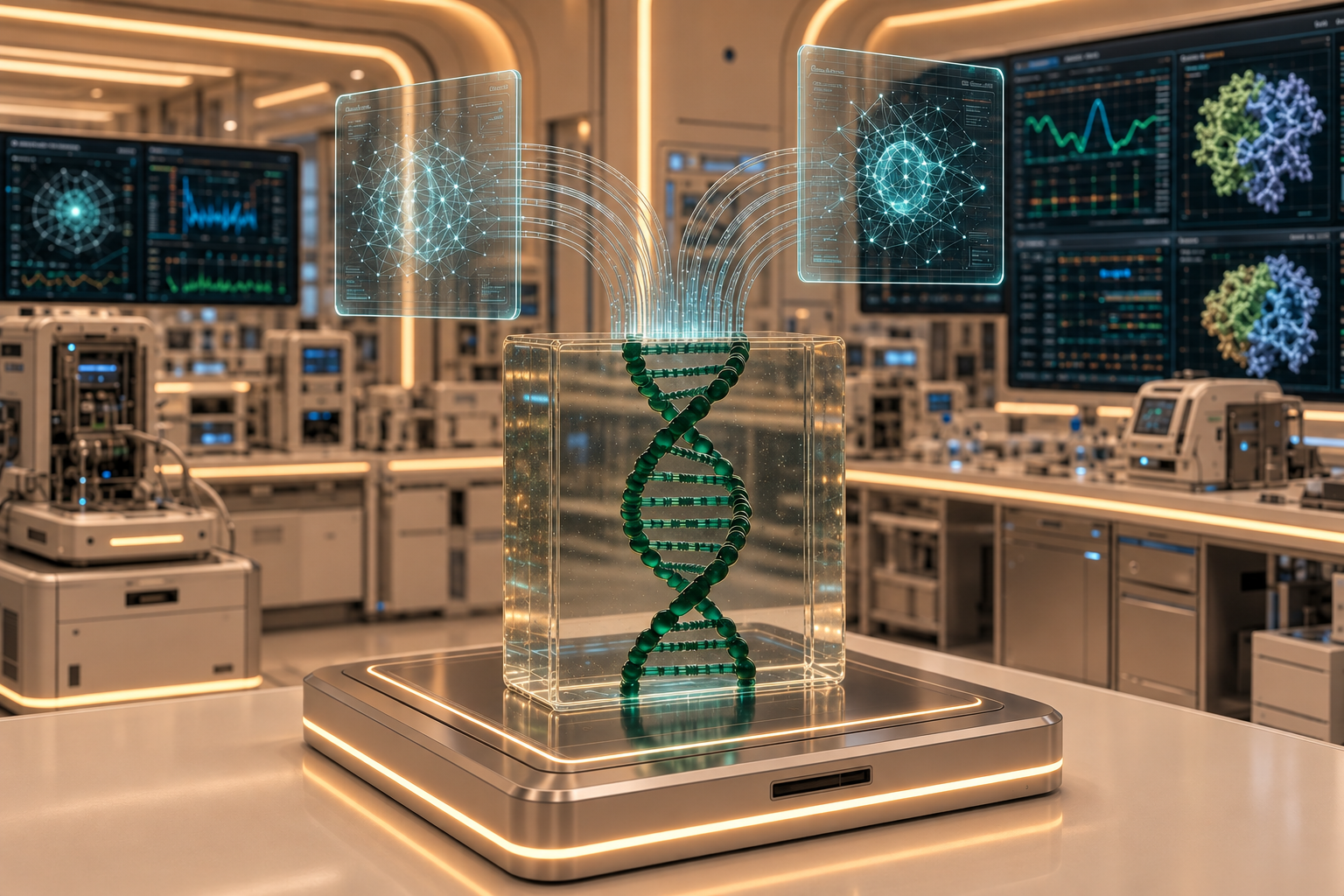
Conceptual illustration

Conceptual illustration

Personalized medicine

Personalized cancer vaccines and new medicines get a boost from OpenAI and Claude

The OpenAI Foundation is funding UNC Lineberger's work to build better data for personalized cancer vaccines, while Novo Nordisk is using Anthropic's Claude in drug-research workflows. These are separate efforts, but both aim at a practical payoff: helping scientists learn from complex evidence and move promising ideas toward new medicines more efficiently.

UNC Health · Novo Nordisk

Six more major stories

New possibilities in health

02

Cancer treatment

A new lung-cancer treatment could give some patients more time

BioNTech and OncoC4 reported median survival of 18.5 months with gotistobart versus 10 months with chemotherapy in 87 previously treated patients with squamous non-small-cell lung cancer. If the larger pivotal stage confirms that signal, the treatment could offer a meaningful new option after earlier therapy stops working.

BioNTech

03

Restoring communication

A brain implant turns attempted speech into a talking, expressive avatar

Three people with severe paralysis used a brain implant that decoded attempted speech and animated a digital face. Combining spoken words with facial expression brings assistive communication closer to a natural conversation. The expression came through an experimental avatar; the implant did not restore movement to their bodies.

NIH

04

Gene editing

A newly discovered CRISPR ancestor could inspire new gene-editing methods

AI helped researchers identify VIPR, a viral system that appears to predate CRISPR and binds DNA in an unusual way. Studying how it works could inspire different ways to edit genes or detect disease. This is the discovery of a possible starting point for future technology, not a new treatment.

Innovative Genomics Institute

05

Longevity research

A lung-disease treatment shows early promise for longevity research

Rentosertib was being tested to treat pulmonary fibrosis, a disease that scars the lungs. Researchers also examined blood samples from 42 trial participants: six protein-based models estimated lower biological age in the treated groups. The AI-designed drug is being developed with both lung disease and aging in mind. Could one treatment address disease and aspects of aging together? That is the possibility—not yet proof of longer life or age reversal.

Nature Biotechnology

06

Noninvasive treatment

Treating brain disorders without surgery: researchers test targeted ultrasound

Focused ultrasound directs sound energy toward targets inside the brain without an incision. Researchers are exploring neurological uses, including addiction, while Openwater develops imaging and therapy systems and Nudge studies noninvasive brain interfaces. The potential payoff is access to brain circuits without implanted hardware or surgery. These are separate programs at different stages; the addiction work remains investigational.

Wired · Focused Ultrasound Foundation · Nudge

07

Research tools

AI turns research papers into reusable software for new experiments

Paper2Agent turns methods in scientific papers into software that AI can use to run analyses. Instead of rebuilding those methods from scratch, researchers could reuse them to test new ideas faster. The system still needs the underlying code and data; papers with missing materials could not always be converted.

Nature

Quick discoveries

Engineered bacteria slow pancreatic tumor growth in mice

Researchers injected engineered bacteria that delivered an immune treatment inside pancreatic tumors, activating cancer-fighting T cells and slowing tumor growth in mice. Combining it with chemotherapy, radiation or immunotherapy improved tumor control and survival compared with the individual treatments. The goal is to concentrate cancer treatment where it is needed; it has not yet been tested in people.

University of Chicago


Discarded hair may have a future in your toothpaste

A startup is developing toothpaste around keratin recovered from human hair. The possibility is an everyday health product made from material we normally throw away. The report establishes the product idea and financing; whether it improves oral health still needs independent testing.

Tech.eu

What could come next


Longer independent living: a care robot designed to spot falls and call for help

Tuya introduced Doova, a home robot designed to detect falls, alert caregivers, read documents and manage medication reminders. A dependable version could help older adults stay independent longer and give families earlier warning when something goes wrong; price, availability, privacy and real-world reliability remain unknown.

Humanoids Daily


A blood test aims to catch pancreatic cancer earlier

Researchers studied a blood-based approach to detecting pancreatic cancer earlier, when finding it could make a crucial difference. This is a test under study, not established routine screening; whether it improves survival remains to be shown.

www.nature.com

One last discovery

Rattlesnake blood points to a stronger snakebite antidote

Proteins from rattlesnake blood helped researchers build an antivenom combination with roughly ten times the potency of a current antivenom in laboratory tests. The surprising idea is to borrow the snake's own defenses to improve treatment for people. Human testing is still ahead.

www.sciencedaily.com

Catch up on advances in medicine in a few minutes, or follow the sources and dig deeper. We check the sources and mark our opinions. The judgment is yours.

Look for it every Monday morning.

Subscribe

Feel free to forward this issue to a friend.

Keep Reading

View more
caret-right

The Next Patient

Explore

Home

Archive

Account

Subscribe

Upgrade

© 2026 The Next Patient.
beehiivPowered by beehiiv